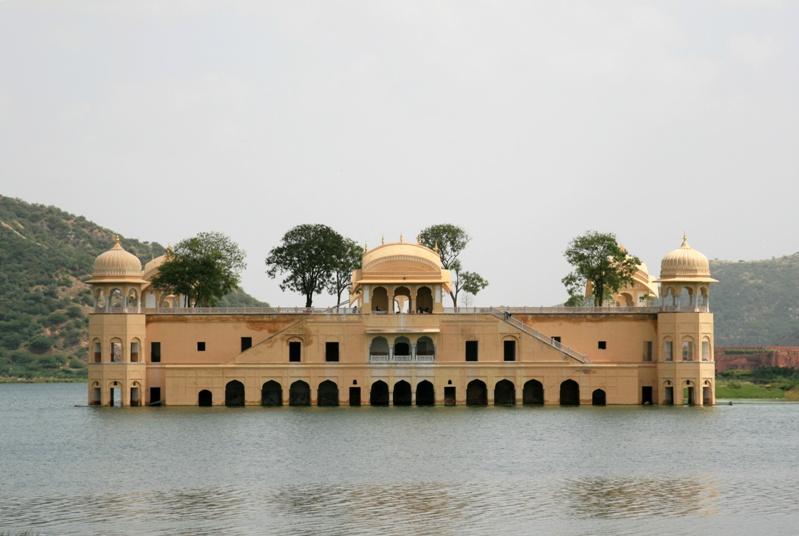
Jal Mahal which literally means the “Water Palace” is a palace located in the middle of the Man Sagar Lake in Jaipur city, the capital of the state of Rajasthan. The palace and the lake around it were modernized and enlarged in the 18th century by Maharaja Jai Singh II of Amber. Jal Mahal, that means water palace in English, is a beautiful place that is located in the center of the lake Man Sagar, in Jaipur. Jal Mahal is considered as one of the most beautiful architectural palace that was built with the Mughal and Rajput craftsmanship. The palace provides a charming view of the Man Sagar Lake and the Nahargarh hills that border it. The Jal Mahal palace is considered an architectural beauty built in the Rajput and Mughal styles of architecture. The complete palace is made of red stone and is 5 story high. The 4 floors of the palace stay under the water and it is only the 5th floor that is visible. There are 4 chattris on all the four corners of the palace. These are octagonal in shape. The fort has some of the exquisite marble cravings which denotes the royal touch and the palace also has twenty pillars which are the cenotaph of the royal family of Raja Jai Singh. The lake, as well as the place, was renovated by Maharaja Jai Singh 2 in the 18th century. During the rainy seasons, the city lake gets filled up with water. The palace is open only through boats that take the tourist from the land to the palace in the center of the lake. Even while crossing the palace for the road, the whole view looks very charming that it attracts people of all ages. The lake used to be a bird watcher’s paradise in the past and was a favorite ground for the Rajput kings of Jaipur for royal duck shooting parties during picnics. The lake was home for more than 150 species of local and migratory birds that included Large Flamingo, Great Crested Grebe, Pintail, Pochards, Kestrel, Coot, Redshank, Marsh Sandpiper, Ruff, Herring Gull, Red-breasted Flycatcher, Grey Wagtail, but their numbers declined with the worsening of the lake. The reserve forest area of the lake catchment has several wild life species such as Deer, Jungle cat, striped hyena, Indian Fox, Indian wild Boar and leopards. Jal Mahal is one or the sites which tells the story of the royals and their exclusive taste and creations.
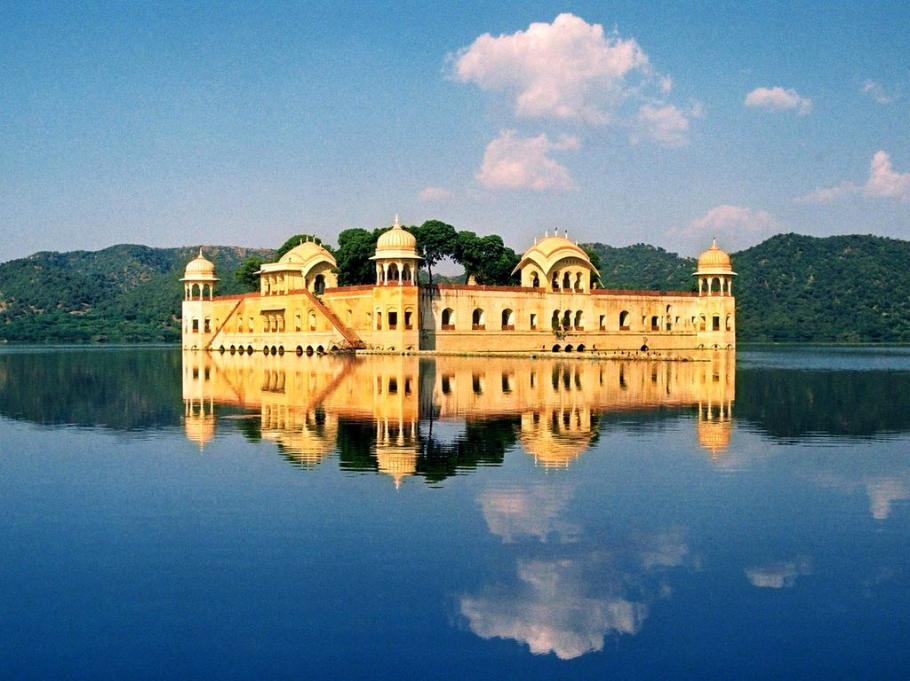
Beautiful from a distance... I wish we could have gone there. Apparently they are going to start boat tours to go inside the palace but not sure when this will finally happen (indian inefficiency). We were so disappointed by the state of the river around the palace. There are so much rubbish, it smells, dead fish everywhere
ITS FORT IN THE MIDDLE OF A BIG LAKE. THE WORK 'JAL' DENOTES WATER. IT IS ON THE WAY TO AMBER OR JAIGARH FORT. THERE IS NO SEPARATE WAY TO THIS FORT. IT IS LOCATED NEAR THE MAIN ROAD, SO DON'T GET FOOLED BY CAB DRIVERS IF THEY CHARGE YOU EXTRA FOR TAKING YOU HERE. THIS FORT LOOKS BEAUTIFUL DURING SUNSET,
About City Palace Jaipur
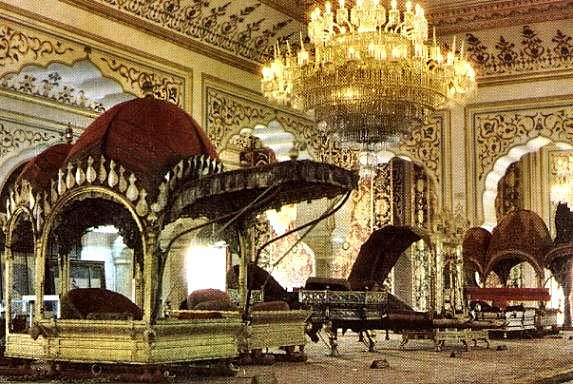
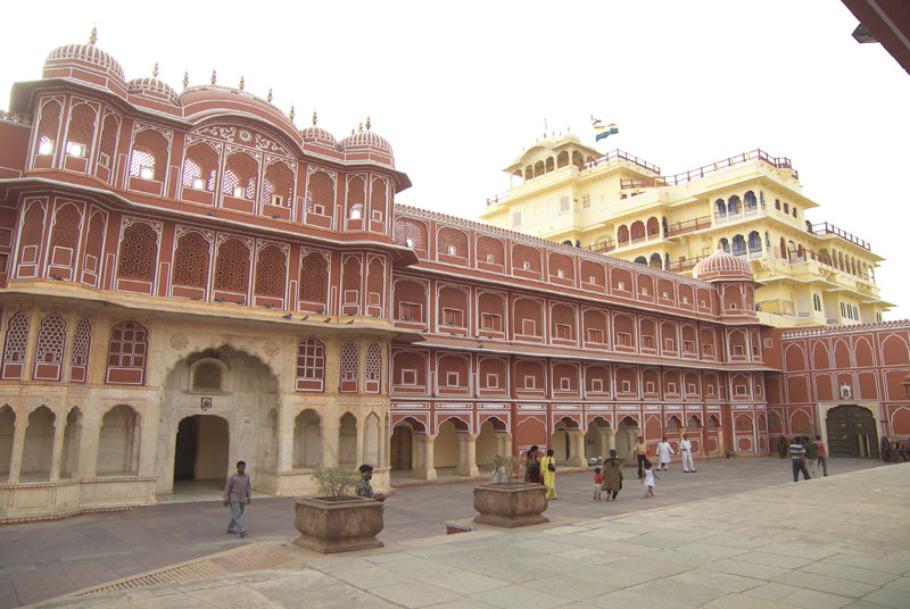
The City Palace is a palace complex, situated in the core of the Pink City Jaipur. The beautiful complex comprising numerous edifices, vast courtyards and attractive gardens, is a souvenir of the majestic history. The Chandra Mahal and Mubarak Mahal are some of the significant structures in the complex. To preserve the valuable items of the bygone era, many compartments of the palace have been converted into museums and art galleries. To witness the beauty of the palace, thousands of visitors from across the world visit the City Palace every year.
History
The City Palace housed the throne of the Maharaja of Jaipur who headed the Kachwaha Rajput clan. Maharaja Sawai Jai Singh II, who ruled Amber from 1699 to 1744, initiated the construction of the city complex that spreads over several acres. He first ordered to erect the outer wall of the palace complex. The construction that was started in 1729, took three years to be completed. The palace complex was completely built in 1732.
Architecture
The palace and its structures have been designed, combining the architectural elements of the Mughal, Europe and the Shilpa Shastra of India. A perfect blend of colours, designs, art and culture can be seen in every nook and corner of the palace.
Entrance Gates
One of the most striking features of the complex is its richly decorated gateways. There are in total three entry gates to the complex, namely Virendra Pol, Udai Pol and the Tripolia Gate. For the visitors, the entry has been arranged from the Udai Pol (the Atish Pol) and the Virendra Pol, while the members of the royal family use the Tripolia entrance.
Mubarak Mahal
Built with a fusion of the Islamic, Rajput and European architectural styles, the two-floored Mubarak Mahal was made to serve the purpose of a reception centre. Also known as the palace of welcome, it was designed and built by Maharaja Madho Singh II in the late 19th century. Presently, it is being visited by the tourists and travellers as a costume museum. It has been turned into a fine storehouse containing various kinds of fabrics like sanganeri block prints, Kashmiri pashminas, and regal garments. Must See: Among the collection at the museum, there are capacious clothes stored here that belong to the ruler Sawai Madho Singh I. He weighed about 250 kilograms and had 108 wives.
Chandra Mahal
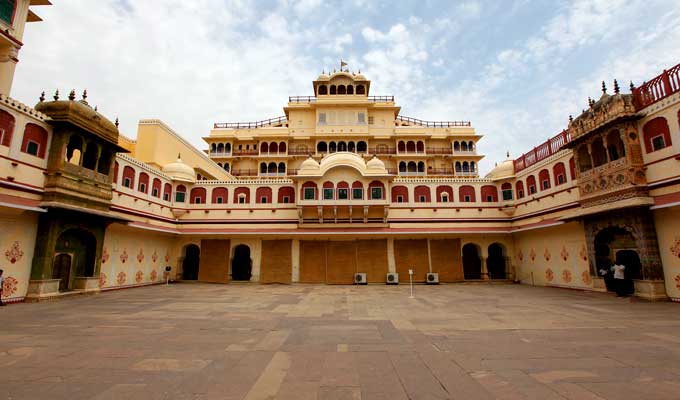
The seven-storeyed Chandra Mahal, also known as the Chandra Niwas, is located in the west end of the complex amidst beautiful gardens and a lake. Each floor of the structure has been given a name such as the Pitam-Niwas, Ranga-Mandir, Sukh-Niwas, Shri-Niwas, Mukut Mahal and Chabi-Niwas. The walls of the building have been ornamented with exclusive paintings, splendid works of mirror and floral adornments. However, the visitors can visit only the ground floor where manuscripts, carpets and some other goods from the royal treasure have been stored. The visitors enter the mahal via a beautiful peacock gate. The upper floors of the building have balconies, while there is a pavilion at the roof that provides a panoramic view of the city. Also, at the top of the Chandra Mahal is a flag whose furling symbolises the presence of the royal family in the palace. The flag hoisted at the palace is evidently "one and a quarter" in size, being in accordance to the meaning of the name of the royal family, 'Sawai'.
Pitam Niwas Chowk
While paving your way to the Chandra Mahal, you will walk through an inner courtyard, Pitam Niwas Chowk. The chowk has four entry points, also called as Ridhi Sidhi Pol; each has its own beauty and significance. The four gateways symbolise the four seasons and are dedicated to Hindu deities.
The gateways are:
Northeast Peacock Gate: Adorned with colourful designs of peacocks, the gate stands for autumn and is dedicated to Lord Vishnu Southwest Lotus Gate: This doorway with running floral designs indicates summer season and is dedicated to Lord Shiva-Parvati Northwest Green Gate: Also called as the Leheriya, this green coloured gate paints a picture of spring season and is dedicated to Lord Ganesha Rose Gate: Having beautiful flowers inscribed on it, the multihued doorway represents winter season and is dedicated to Goddess Devi
Diwan-I-Khas
A private audience pavilion of the Maharajas was called as Diwan-I-Khas. The chamber is also known as Sarvato Bhadra, meaning open from all four sides but not corners. It is a marble floored hall, located between the armoury and the art gallery. In the hall, there are two 1.6 metres high vessels of pure silver having a volume of 4000 litres and weighing 340 kilograms. The two grand vessels have been recorded in the Guinness Book of World Records as the world's largest sterling silver vessels. They were made on the orders of the Maharaja Sawai Madho Singh II, from 14000 melted silver coins without soldering, for the purpose of storing the holy water of the Ganges. Therefore, the vessels were named as Gangajelies, meaning urns containing Ganges' water. The two vessels were carried by the king to England in 1901 as he didn't want to commit a religious blunder by drinking the English water.
Diwan-E-Aam
A hall made for holding public meetings and gatherings, the 'Diwan-E-Aam' or the Sabha Niwas is one of the important structures of the complex. The ceiling of the building has been painted in vibrant colours. However, the chamber has now been turned into an art gallery, displaying exquisite miniature paintings of Persian, Mughal and Rajasthani art. Under the richly decorated ceiling, it also stores ancient texts, embellished rugs and carpets. Also, the visitors must take a look at the Golden throne, famous as Takth-e-Rawal which was used as the seat of the Maharaja.
Maharani palace
As the name suggests, this place was occupied by the royal queen. Presently, it's serving the purpose of a museum, housing arms and weapons of the royal clan. The ceiling of this compartment has been adorned using semiprecious stones and gems. Must See: If you happen to visit the palace, you must enter the Maharani Palace to have a sight of the scissor-action dagger. It is one of the most dangerous weapons of those times, if this is pulled back after inserting into someone's body, it disembowels the victim.
Bhaggi Khana
In the palace complex, the Bhaggi Khana is one place where you can get a glimpse of different kinds of old carriages, palanquins and European cabs which were used by the royal family. Among the numerous coaches and carriages here, there is a European bhaggi which the Maharaja received as a gift from the Prince of Wales in the year 1876. It is famous as the Victoria bhaggi.
Govind Dev Ji temple
The palace complex also incorporates a temple called Govind Dev Ji temple. The temple is dedicated to Lord Krishna. Constructed in the early 18th century, the temple is surrounded by a lovely garden environment. The prayers are offered to the Lord in this temple seven times in a day. The temple was constructed at this place so that the Maharaja can have a clear view of the temple while sitting in the Chandra Mahal.
Jodhpur Tourism
Travel to Jodhpur, a popular tourist destination in Rajasthan and experience the beautiful foregrounding of a rich cultural legacy against the rugged majesty of the desert locale. Founded by Raja Jodha of the Rathore clan in 1459,Jodhpur is today the second largest city in the state of Rajasthan.
The history of Jodhpur is a chequered one. Numerous battles have been waged by the neighboring states to possess the wealth of Jodhpur. Eventually, the ruler of the city signed a treaty with the British in 1818,to ensure the safety of the people and the city.
The tourist attractions in Jodhpur are the palaces and the forts, which are sentinels of history.
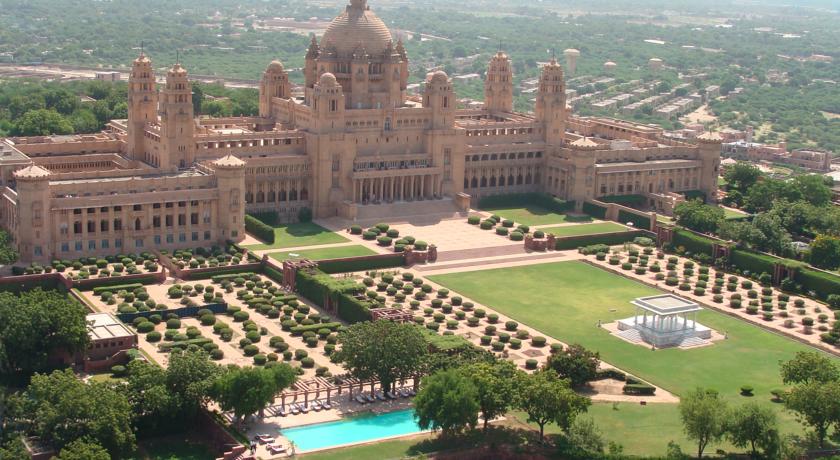
A must see attraction in Jodhpur is the Mehrangarh Fort, which was built by Rao Jodha in 1806. It displays the second largest cannon in Asia. Another attraction is the Umaid Bhawan Palace with a museum that has rarities, antiques and relics of the past like costumes, tea sets, clocks, timepieces and paintings. The palace has now been turned into a heritage hotel though part of it is still royal residence.
How to Reach Jodhpur
The Sun City, Jodhpur is popular for several palaces, forts and temples that adorn the city. All the tourists visiting the state of Rajasthan make it a point to visit Jodhpur. If you are planning a visit to the city, 'How to Reach Jodhpur' provides the following guidelines to aid you in getting there conveniently by air, rail or road.
By Air
Jodhpur airport is located in the cantonment area. It is well connected with the metropolitan cities in India through direct flights.
Flights to Jodhpur
From New Delhi
- Air India
- Jet Airways
- Jet Airways Konnect
From Mumbai
- Jet Airways
- Jet Airways Konnect
From Kolkata
- Jet Airways
- Jet Airways Konnect
- Air India
By Train
Jodhpur Railway Station is located on station road and come sunder the Northern railway network of India. It is directly connected with the major cities in India like Delhi, Mumbai, Jaipur and other cities.
Trains to Jodhpur
From New Delhi
- Delhi Jaisalmer Express
- Mandore Express
- Rajasthan Sampark Kranti Express
From Mumbai
- Suryanagari express
- Bangalore Jodhpur Express
- Ranakpur Express
From Kolkata
- Howrah Jodhpur SF Express
By Road
Jodhpur has a good road connection .You can reach Jodhpur from Delhi via Gurgaon, Jaipur, Ajmer, Beawar and Pali. If you are on a Rajasthan Tour and then you can make a trip to Jodhpur from Bikaner or Jaisalmer by bus or by hiring a cab.
Distance to Jodhpur
- From delhi - 589 KM
- From jaipur - 331 KM
- From jaisalmer - 308 KM
- From pune - 1099 KM
Jodhpur Distance Chart
Places to Visit in Jodhpur
- Mehrangarh Fort
- Umaid Bhawan
- Balsamand Lakes
- Mandore
- Mahamandir Temple
- Kailana lake
More on tourist attractions of Jodhpur
Shopping in Jodhpur
If you want to do a colorful shopping, then you should go shopping in Jodhpur.The city of Jodhpur in Rajasthan is famous for its ethnic clothes, exquisite handicrafts and intricately carved furniture.
A walk through the markets of Jodhpur selling mirrors, sequins, beads, lehengas and turbans will be a peep into the world of glitz and color and ethnic splendor. While shopping in Jodhpur remember to buy a pair of mojiris or traditional Jodhpuri shoes at the Mochi Bazaar as a beautiful souvenir from the city of Jodhpur. For textiles, you can choose from the bales of brightly colored cloth, bandhini, tie and dye and block prints at Kapra Bazaar. The government emporiums like the National Handloom Corporation, Salawas Durry Udyog are places to check out for quilts, carpets and wooden furniture and handicrafts.
Do not be surprised by the heaps of red chilli on the pavement stalls in Jodhpur market. Besides creating a colorful hue against the Jodhpur desert landscape, it is also renowned as the best red chilli in the region especially the Mathaniya red chilli.
Umaid Bhawan Palace
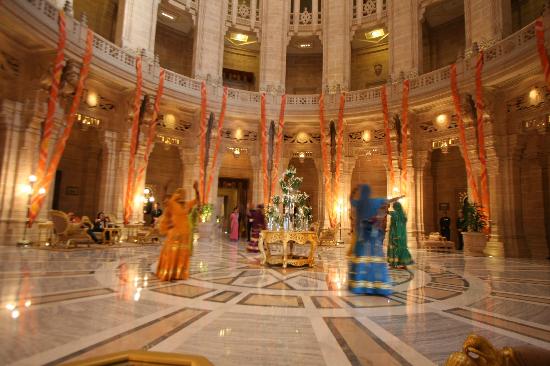
Grace your footsteps as you step into the magnificent Umaid Bhawan Palace, Jodhpur. Still the the royal residence of the Jodhpur royal family, the palace is a melting pot of the elegance of eastern and western architecture.
Umaid Bhawan Palace accommodation
Experience the luxurious royal ambience in the 64 well appointed rooms and suits in Art deco style.
- The Maharani Suite: Originally the room of Umaid Singhs' Maharani, with magnificent views of the palace garden and the Mehrangarh Fort.
- The Maharaja Suite: graced once by Maharaja Umaid Singh; ornamented with murals and a secret bar in the drawing room.
- Royal Suites: Elegant rooms with panoramic views of the Palace Lawns, Fountain courtyard, the city and the Meherangarh Fort.
Dining in Umaid Bhawan Palace
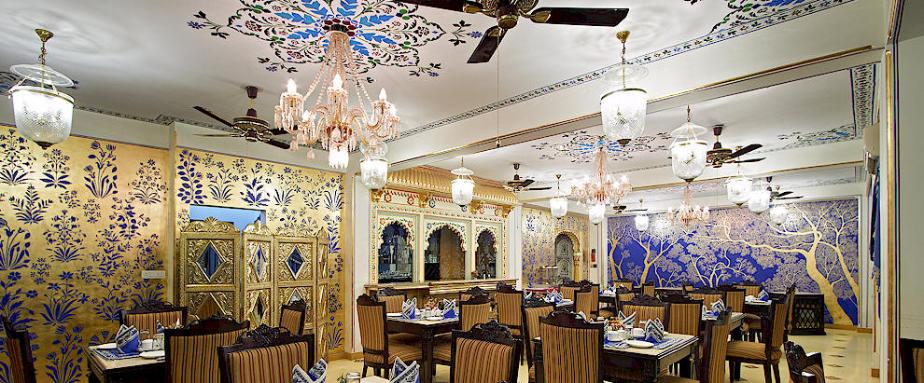
Enjoy multi-cuisine menus of your choice and experience the regal ambience in Umaid Bhawan Palace restaurants:
- Risala: Majestic a la carte restaurant
- The Pillars: The cozy Coffee Shop
- The Trophy Bar: Choicest of spirits and beverages
Amenities and Services offered by Umaid Bhawan Palace
- Round the clock Room Service
- Billiards, Tennis, Squash, Croquet & Jogging Track
- Telephones with international direct dialing
- All major Credit Credit Cards accepted
- Currency Exchange
- Taj Spa
- Doctor and Beautician on Call
- Fitness Centre
- Golf/Horse Riding/Polo (on request)
- 'Jawaharat' Boutique for ethnic jewelery, garments and souvenirs
- Shopping Arcade - Books, Garments, Antiques
- Laundering and Dry Cleaning services
- Mini Refrigerators in room
- Palace Museum and Library
- Palmist/Astrologer
- Private Auditorium / Home Theatre
- Televisions with satellite channels
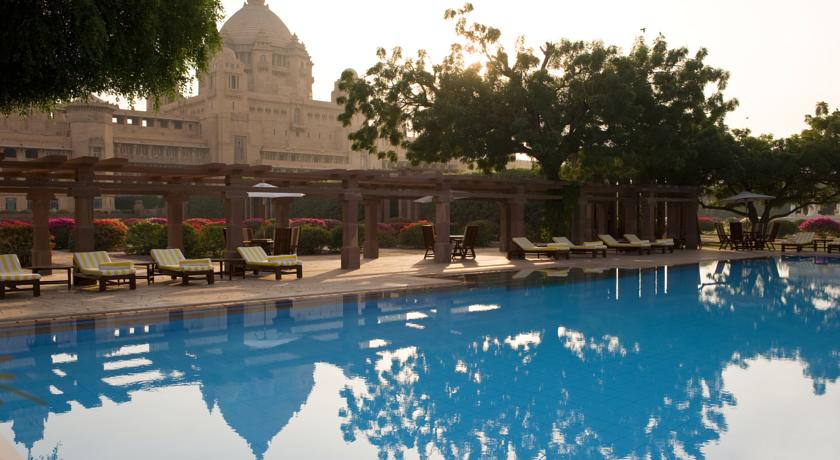
- Temperature-controlled indoor and outdoor swimming pools
- Well- informed Travel Counter
- Two restaurants and the Trophy Bar
- 4 elaborate Meeting Rooms & Banquet Facilities with Catering facilities on request
Hawa Mahal, Jaipur
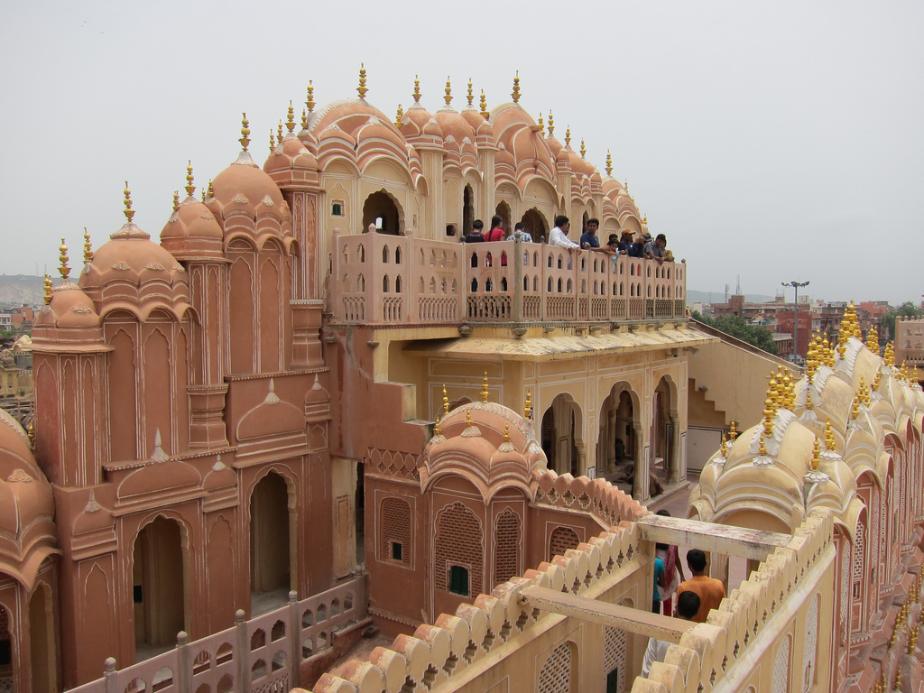
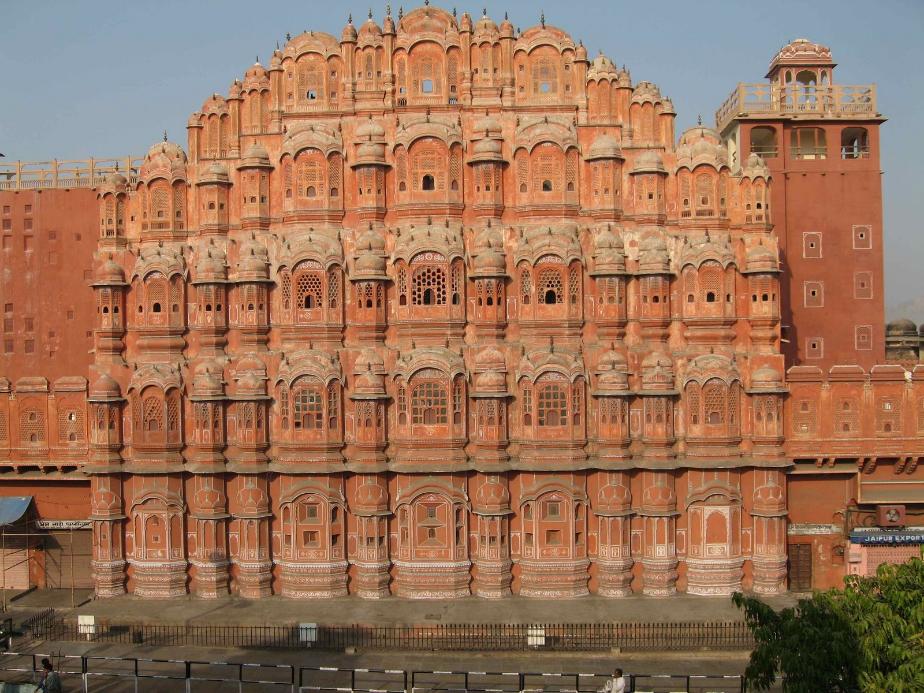
The regal Hawa Mahal is perhaps one of the oft visited tourist destinations of the lovely Pink City of Jaipur. instituted by the famed maharaja sawai pratap singh, circa 1799, the 'palace of the winds', is the repository of history and tradition of the colorful state of Rajasthan.
A portion of the magnificent City Palace, the Hawa Mahal is a stupendous melange of Rajasthan and Mughul schools of architecture. Etched in punk hued sandstone, it soars up to a height of about five stories and is one of the most remarkable monuments of Rajasthan.
The brain child of Lal Chand Usta, it comprises of nine hundred and fifty three tiny jharokha adorned, curved roofed cells, that cuts a comely picture. The unembellished and stark back portion of the mahal may, however, intrigue visitors.
Legend has it that the purpose of building this arresting site was to enable the purdah clad womenfolk to soak in the feel of the sights and sounds of the place.
Enchanting views of the majestic Jantar Mantar, the celebrated observatory, the grand City Palace and the bustling Siredeori Bazaar is the unique selling protocol of the beautiful Hawa Mahal. The history buffs can queue up at the museum and catch a glimpse of the glorious regal life that was.
It is said that the stunning Hawa Mahal is in its glorious best when the golden rays of the morning sun caresses it. So, troop to this tourist hotspot and be a witness to breathtaking beauty and splendor.
Jantar Mantar,Jaipur
The Cosmos and the vast Universe has always remained an enigma to mankind. Since yore the Universe has always fascinated man.
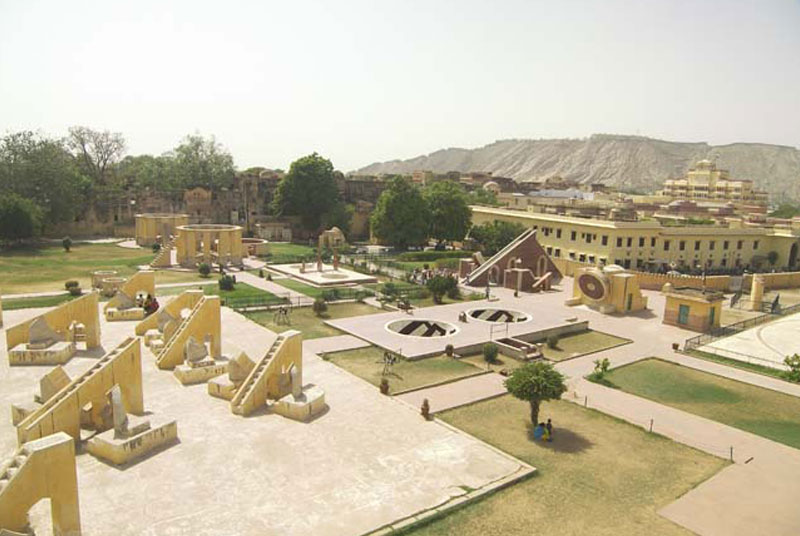
Various observatories have been created for discovering the mysteries of the cosmos and the Jantar Mantar in Jaipur is one them. In fact the Jantar Mantar in Jaipur is the largest and one of the best preserved of five observatories constructed by Maharaja Sawai Jai Singh all over northern India. The Jantar Mantar in the Pink City consists of multiple structures of stone masonry build in varied and large geometric forms that have caught the attention of artists, architects and art historiographers throughout the world.
Etymology - The term 'Jantar Mantar' is derived from the Sanskrit word-'Yantra Mantra' meaning instruments and formulae. The 'Yantra Mantra' literally means 'Magical Device'.
Location- The Jantar mantar, the observatory in Jaipur is located near the gate of the illustrious City Palace of Jaipur in Rajasthan.
History- The Jantar Mantar was built by Maharaja Sawai Jai Singh II, the founder of Jaipur and the Rajput ruler of Amber, between 1728 and 1734. For being a reputed astronomer, Jai Singh was commissioned by Emperor Muhammad Shah, to correct the astronomical tables and to confirm the data that was available on the planetary positions. He took nearly seven years to finish the Jantar Mantar. It was restored in 1901 and in 1948 the famous observatory was declared a national monument.
Overview- The observatory consists of 13 different instruments of various geometrical forms for calculating the time of day, the heights of heavenly bodies, predicting eclipses and the situations of constellations. These instruments are of gigantic sizes so that accurate readings can be obtained. The instruments can make accurate measurements within one second. Jantar Mantar consists of the Jaiprakash Yantra, Samrat Yantra, Ram Yantra and the Composite instrument which contains a sundial and an enormous hemisphere on the northern wall.
The colossal Samrat Jantar is the sun dial that is 90 feet high and its shadow is carefully contrived to tell the time of a day. The small domed cupola (chhatri) at the top is used for predicting eclipses and the coming of monsoons.
Till dated , the instruments of Jantar Mantar are used for forecasting weather, the duration of seasons, the intensity of the monsoon, and the prospects of flood or famine. The Jantar Mantar stands as a testimony to the wisdom of the former epoch and awaits the visit of every tourist.